Issue Ebook
cover story

Latest Issue
Volume 7 , Issue 3 , 2020
-
 Abstract:The novel severe acute respiratory syndrome coronavirus 2 (SARS-CoV-2) is the cause of a rapidly spreading illness, coronavirus disease 2019 (COVID-19), affecting more than seventeen million people around the world. Diagnosis and treatment guidelines for clinicians caring for patients are needed. In the early stage, we have issued "A rapid advice guideline for the diagnosis and treatment of 2019 novel coronavirus (2019-nCoV) infected pneumonia (standard version)"; now there are many direct evidences emerged and may change some of previous recommendations and it is ripe for develop an evidence-based guideline. We formed a working group of clinical experts and methodologists. The steering group members proposed 29 questions that are relevant to the management of COVID-19 covering the following areas: chemoprophylaxis, diagnosis, treatments, and discharge management. We searched the literature for direct evidence on the management of COVID-19, and assessed its certainty generated recommendations using the Grading of Recommendations, Assessment, Development and Evaluation (GRADE) approach. Recommendations were either strong or weak, or in the form of ungraded consensus-based statement. Finally, we issued 34 statements. Among them, 6 were strong recommendations for, 14 were weak recommendations for, 3 were weak recommendations against and 11 were ungraded consensus-based statement. They covered topics of chemoprophylaxis (including agents and Traditional Chinese Medicine (TCM) agents), diagnosis (including clinical manifestations, reverse transcription-polymerase chain reaction (RT-PCR), respiratory tract specimens, IgM and IgG antibody tests, chest computed tomography, chest X-ray, and CT features of asymptomatic infections), treatments (including lopinavir-ritonavir, umifenovir, favipiravir, interferon, remdesivir, combination of antiviral drugs, hydroxychloroquine/chloroquine, interleukin-6 inhibitors, interleukin-1 inhibitors, glucocorticoid, qingfei paidu decoction, lianhua qingwen granules/capsules, convalescent plasma, lung transplantation, invasive or noninvasive ventilation, and extracorporeal membrane oxygenation (ECMO)), and discharge management (including discharge criteria and management plan in patients whose RT-PCR retesting shows SARS-CoV-2 positive after discharge). We also created two figures of these recommendations for the implementation purpose. We hope these recommendations can help support healthcare workers caring for COVID-19 patients.Keywords:COVID-19;SARS-CoV-2;Recommendation;Chemoprophylaxis;diagnosis;Treatment;Discharge management;Traditional Chinese medicine;Guideline7|0|0Updated:2023-06-05
 -
 Abstract:Thrombocytopenia is a common complication of critical care patients. The rates of bleeding events and mortality are also significantly increased in critical care patients with thrombocytopenia. Therefore, the Critical Care Medicine Committee of Chinese People's Liberation Army (PLA) worked with Chinese Society of Laboratory Medicine, Chinese Medical Association to develop this consensus to provide guidance for clinical practice. The consensus includes five sections and 27 items: the definition of thrombocytopenia, etiology and pathophysiology, diagnosis and differential diagnosis, treatment and prevention.Keywords:Thrombocytopenia;Adult;Critical care;diagnosis;Treatment;Expert consensus7|0|0Updated:2023-06-05
POSITION ARTICLE AND GUIDELINES

-
 Abstract:Flamethrowers are widely considered one of warfare's most controversial weapons and are capable of inflicting gruesome physical injuries and intense psychological trauma. Despite being the last of the major combatants in World War II (WWII) to develop them, the U.S. military quickly became the most frequent and adept operator of portable flamethrowers. This gave the U.S. military ample opportunity to observe the effects of flamethrowers on enemy soldiers. However, while most people in modern times would consider immolation by flamethrower to be an unnecessarily painful and inhumane way to inflict casualties, immolation was, at one point during WWII, referred to as "mercy killing" by the U.S. Chemical Warfare Service (CWS). This mischaracterization arose from a series of first-hand accounts describing what were believed to be quick, painless, and unmarred deaths, as well as from a poor and incomplete understanding of flamethrower lethality. As a result, indirect mechanisms such as hypoxia and carbon monoxide poisoning were generally absent from accounts of the flamethrower's fatal effects. It was not until several years after flamethrowers were introduced to the frontlines that the CWS and National Defense Research Committee (NDRC) conducted a series of tests to better understand the physiological and toxicological effects of flamethrowers. This article examines how the initial absence of scientific data on the physiologic effects of flamethrowers led to an inaccurate understanding of their lethality, and bizarre claims that one of history's most horrific instruments of war was considered one of the more "humane" weapons on the battlefield.Keywords:Flamethrower;burns;carbon monoxide;Asphyxiation;hypoxia;Chemical warfare5|0|0Updated:2023-06-05
PERSPECTIVE
-
 Abstract:Background:This study evaluated the VIsion PERformance (VIPER) simulator's ability to assess the functional visual performance in warfighters conducting civilian and military tasks.Methods:Thirty service members, aged 25–35 years old with a best corrected distance visual acuity (VA) better than or equal to 20/20 or logarithm of the minimum angle of resolution (logMAR) 0.00, were randomized to locate and identify road signs and mock improvised explosive devices (IEDs) under either daytime conditions or with infrared imagery, with (cc) and without (sc) wearing their habitual correction. Participants also underwent binocular uncorrected (UDVA) and corrected (CDVA) visual assessment, refraction, contrast sensitivity testing and wavefront aberrometry.Results:The mean age was 28.47 years. The manifest spherical equivalent was –3.16±1.75 diopters (D), the UDVA in both eyes (OU) was logMAR 0.83±0.47, and the CDVA OU was –0.11±0.06. For VIPER, the mean difference in the detection distance (DD) for road signs ccDD vs. scDD was (76.7±52.8) m (P<0.001). The average difference in identification distance (ID) ccID vs. scID was (13.9±6.3) m (P<0.001). The mean accuracies were 83.5% and 27.9% for cc and sc, respectively (P<0.001). The regression analysis indicated that a 1.6 m change in the distance accounts for a 1% change in the accuracy (P=0.002). Without correction, a 4.1 m change accounts for a 1% change in the accuracy(P<0.001). The average IED ccDD was (29.9±8.2) m, and that for scDD was (13.2±13.6) m (P<0.001). The average IED ccID was (32.2±6.2) m and that for the scID was (7.4±10.3) m (P<0.001). The mean IED identification accuracy was 46.7 and 11.4% for cc and sc, respectively (P<0.001).Conclusions:The preliminary results reflect VIPER's ability to assess functional visual performance when detecting and identifying signs and IEDs. Furthermore, VIPER is able to detect performance changes with and without correction.Keywords:Functional visual performance;Military task performance5|0|0Updated:2023-06-05
 -
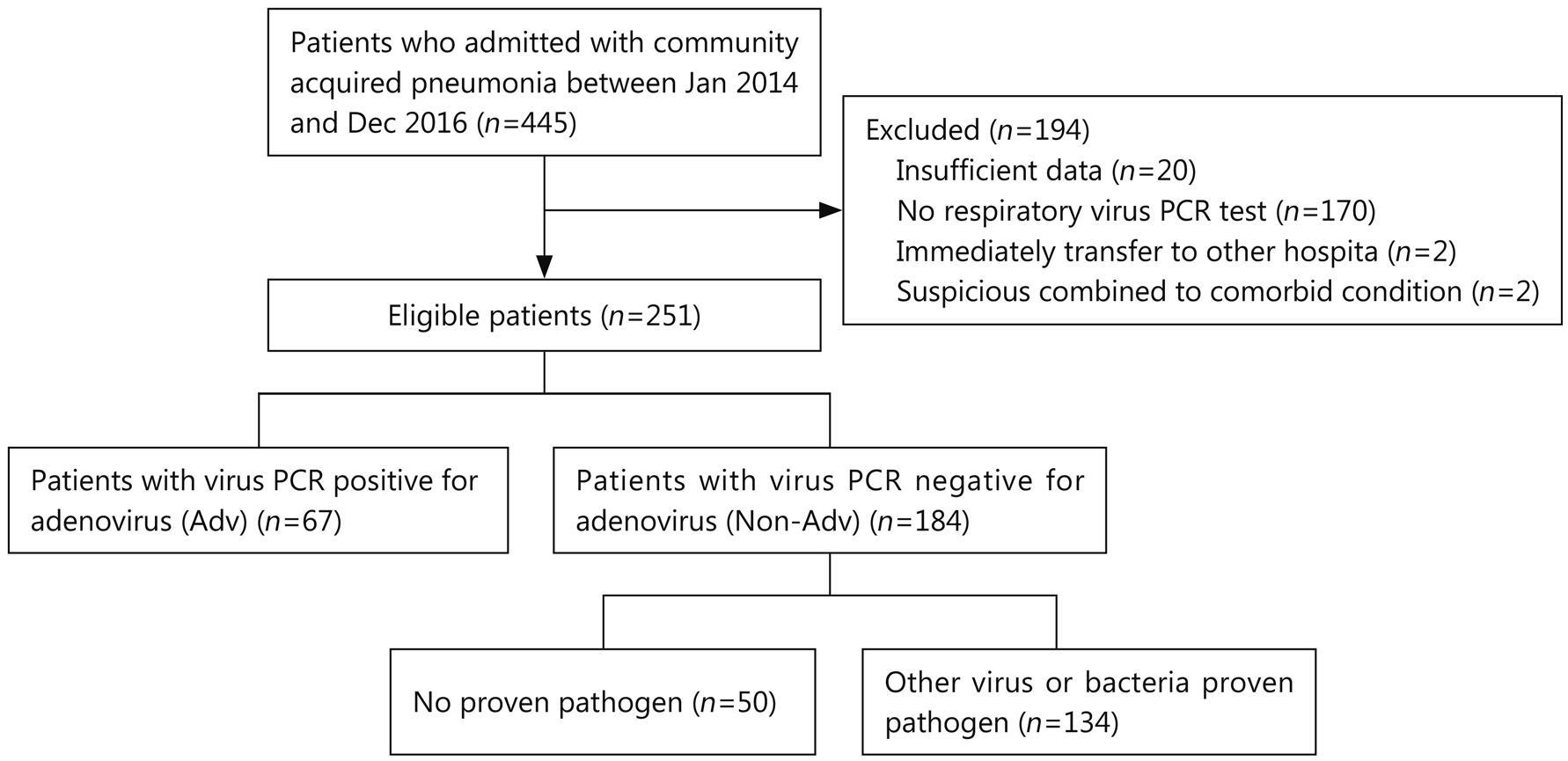 Abstract:Background:In 2014, an outbreak of adenoviral pneumonia occurred in the Korean military training center. However, there are limited data on the characteristics of the fever and its response to antipyretic therapy in immunocompetent adults with adenovirus-positive community-acquired pneumonia (CAP).Methods:The medical records of the patients who were admitted to the Armed Forces Chuncheon Hospital for the treatment of CAP between January 2014 and December 2016 were retrospectively analyzed. The patients were divided into three groups, namely, the adenovirus-positive (Adv) group, the adenovirus-negative (Non-Adv) group and the unknown pathogen group, according to the results of a polymerase chain reaction (PCR) test and sputum culture used to measure adenovirus and other bacteria or viruses in respiratory specimens. We evaluated and compared the demographics, clinicolaboratory findings and radiological findings upon admission between the two groups.Results:Out of the 251 military personnel with CAP during the study periods, 67 were classified into the Adv group, while 134 were classified into the Non-Adv group and 50 were classified into the unknown pathogen group. The patients in the Adv group had a longer duration of fever after admission ((3.2±1.6) d vs. (1.9±1.2) d vs. (2.2±1.5) d, P=0.018) and symptom onset ((5.8±2.2) d vs. (3.9±2.5) d vs. (3.7±2.0) d, P=0.006) than patients in the Non-Adv and unknown pathogen groups, respectively. The patients in the Adv group had a higher mean temperature at admission(37.8±0.3 vs. 37.3±0.3 vs. 37.3±0.3, P=0.005), and more patients were observed over 40 and 39 to 40(14.9% vs. 2.2%vs. 4.0%, 35.8% vs. 3.7% vs. 6.0%, P<0.001) than those in the Non-Adv and unknown pathogen groups, respectively. The Adv group more commonly had no response or exhibited adverse events after antipyretic treatment compared to the Non-Adv group (17.9% vs. 1.5%, 35.0% vs. 4.3%, P<0.001, P=0.05, respectively). In addition, the time from admission to overall clinical stabilization was significantly longer in the patients in the Adv group than in those in the Non-Adv group ((4.3±2.8) d vs. (2.9±1.8) d, P=0.034, respectively). Furthermore, no significant difference in the length of hospital stay was observed between the two groups, and no patient died in either group.Conclusions:In this study, Adv-positive CAP in immunocompetent military personnel patients had distinct fever characteristics and responses to antipyretic treatment.Keywords:adenovirus;Fever;Response to antipyretic treatment4|0|0Updated:2023-06-05
 -
 Abstract:Background:The impact of sleep disorders on active-duty soldiers' medical readiness is not currently quantified. Patient data generated at military treatment facilities can be accessed to create research reports and thus can be used to estimate the prevalence of sleep disturbances and the role of sleep on overall health in service members. The current study aimed to quantify sleep-related health issues and their impact on health and nondeployability through the analysis of U.S. military healthcare records from fiscal year 2018 (FY2018).Methods:Medical diagnosis information and deployability profiles (e-Profiles) were queried for all active-duty U.S. Army patients with a concurrent sleep disorder diagnosis receiving medical care within FY2018. Nondeployability was predicted from medical reasons for having an e-Profile (categorized as sleep, behavioral health, musculoskeletal, cardiometabolic, injury, or accident) using binomial logistic regression. Sleep e-Profiles were investigated as a moderator between other e-Profile categories and nondeployability.Results:Out of 582,031 soldiers, 48.4% (n=281, 738) had a sleep-related diagnosis in their healthcare records, 9.7%(n=56,247) of soldiers had e-Profiles, and 1.9% (n=10, 885) had a sleep e-Profile. Soldiers with sleep e-Profiles were more likely to have had a motor vehicle accident (pOR (prevalence odds ratio)=4.7, 95% CI 2.63–8.39, P≤0.001) or work/duty-related injury (pOR=1.6, 95% CI 1.32–1.94, P≤0.001). The likelihood of nondeployability was greater in soldiers with a sleep e-Profile and a musculoskeletal e-Profile (pOR=4.25, 95% CI 3.75–4.81, P≤0.001) or work/dutyrelated injury (pOR=2.62, 95% CI 1.63–4.21, P≤0.001).Conclusion:Nearly half of soldiers had a sleep disorder or sleep-related medical diagnosis in 2018, but their sleep problems are largely not profiled as limitations to medical readiness. Musculoskeletal issues and physical injury predict nondeployability, and nondeployability is more likely to occur in soldiers who have sleep e-Profiles in addition to these issues. Addressing sleep problems may prevent accidents and injuries that could render a soldier nondeployable.Keywords:Medical readiness;Behavioral sleep medicine;Deployability;Healthcare records;Military;Big data;Data mining4|0|0Updated:2023-06-05
 -
 Abstract:Background:Tobacco use, correlated with reduced physical fitness, is one of the leading causes of avoidable death worldwide. It increases the risk of dementia and can shorten the lifespan by 10 years. For the German Armed Forces(Bundeswehr), figures on smoking behavior have not been comprehensively captured. This study analyzes current data in a large sample from this population.Methods:Based on an employee survey as part of the Occupational Health Management System, data on smoking behavior from 13, 326 participants were analyzed in relation to age, gender, professional status, education level and membership in military operational units versus other agencies.Results:Smoking behavior varied significantly (P<0.001) by age group (younger > older), gender, professional status, military agency membership status, and education level (the lower the education level, the higher the smoking rates). With the exception of the downward trend in smoking behavior with increasing age among civilian employees, these results were all significant (P<0.005).Conclusions:This data analysis shows that smoking prevalence among personnel in the area of responsibility of the Federal Ministry of Defense is comparable to the current data from corresponding surveys of the German population. Depending on gender, they generally show values that are slightly above those of the German population. The well-known trend in the general population of decreasing smoking prevalence with increasing age is also seen in this analysis. However, there are considerable differences in the smoking prevalence among individual subgroups(professional status, agency, gender, education level). The data show that particular young soldiers in the armed forces should be the target group for further preventive measures.Keywords:prevention;Smoking;Military;Health promotion4|0|0Updated:2023-06-05
 -
 Abstract:Background:None of study mentioned about contrast-induced acute kidney injury (CI-AKI) in people who have received contrast agents twice within in a short period of time. This study is trying to identify the predictors.Methods:We enrolled 607 patients between Oct. 2010 and Jul. 2015 who received contrast agents twice within 30 days in the Department of Cardiology of the General Hospital of Shenyang Military Region. The primary outcome was CI-AKI within 72 h after contrast agent exposure. Patients were divided into groups A (n=559) and group B (n=48) according to whether CI-AKI occurred after the second agent.Results:Patients in group B (CI-AKI occurred after the second agent) had a more rapid heart rate and more usage of diuretics and digitalis. In group B, CI-AKI occurred more frequently after the first agent. Multivariate logistic regression showed that diuretic (P=0.006) and intra-aortic balloon pump (IABP) usage (P=0.012) were independent predictors of CI-AKI after the first agent. Angiotensin-converting enzyme inhibitor/Angiotensin II receptor antagonist (ACEI/ARB) usage (P=0.039), IABP usage (P=0.040) and CI-AKI occurring after administration of the first agent (P=0.015) were independent predictors of CI-AKI after the second. Furthermore, dividing the patients into tertiles of the time interval between the two agents showed that CI-AKI occurred more frequently when the second agent was administered within 1–3 days after the first exposure than within 4–6 days (12.4% vs. 5.0%, P=0.008) or ≥7 days (12.4% vs. 6.4%, P=0.039).Conclusions:Diuretic and IABP usage are independent predictors of CI-AKI following exposure to a first contrast agent. The major predictors of CI-AKI after exposure to a second agent are time since the first contrast exposure, ACEI/ARB usage, and IABP usage. More importantly, a three-day interval between the two agents is associated with a higher incidence of CI-AKI following the second administration.Keywords:Predictors;Contrast-induced acute kidney injury;coronary artery disease4|0|1Updated:2023-06-05
RESEARCH
- Abstract:Methodological quality (risk of bias) assessment is an important step before study initiation usage. Therefore, accurately judging study type is the first priority, and the choosing proper tool is also important. In this review, we introduced methodological quality assessment tools for randomized controlled trial (including individual and cluster), animal study, non-randomized interventional studies (including follow-up study, controlled before-and-after study, before-after/ pre-post study, uncontrolled longitudinal study, interrupted time series study), cohort study, case-control study, cross-sectional study (including analytical and descriptive), observational case series and case reports, comparative effectiveness research, diagnostic study, health economic evaluation, prediction study (including predictor finding study, prediction model impact study, prognostic prediction model study), qualitative study, outcome measurement instruments (including patient - reported outcome measure development, content validity, structural validity, internal consistency, cross-cultural validity/measurement invariance, reliability, measurement error, criterion validity, hypotheses testing for construct validity, and responsiveness), systematic review and meta-analysis, and clinical practice guideline. The readers of our review can distinguish the types of medical studies and choose appropriate tools. In one word, comprehensively mastering relevant knowledge and implementing more practices are basic requirements for correctly assessing the methodological quality.Keywords:Methodological quality;Risk of bias;Quality assessment;Critical appraisal;Methodology checklist;Appraisal tool;Observational study;Qualitative study;Interventional study;Outcome measurement instrument4|0|26Updated:2023-06-05
REVIEW
- Abstract:Heat stroke is the most severe type of heat illness, it is often accompanied by severe multiorgan damage and has a high fatality rate. In January 2020, based on new research evidence and the experiences of Chinese experts in heat stroke, the Expert Group of Heat Stroke Prevention and Treatment of the Chinese People's Liberation Army (PLA) and the Professional Committee of Critical Care Medicine of the Chinese PLA jointly issued a new Expert Consensus on the Diagnosis and Treatment of Heat Stroke in China. This article aims to interpret and supplement the major updates to the new consensus.Keywords:Heat stroke;Definition;diagnosis;Treatment;Targeted temperature management4|1|0Updated:2023-06-05
COMMENTARY
- Technical support is provided by Beijing Founder electronics co., LTD 京ICP备09064830号-19
 京公网安备11010802024621
 - It is recommended to read the content of this site in Chrome&IE9+. Please switch to extreme mode in browser 360.
- Cookies We use cookies to help provide and enhance our service and tailor content. By continuing, you agree to the use of cookies.
0